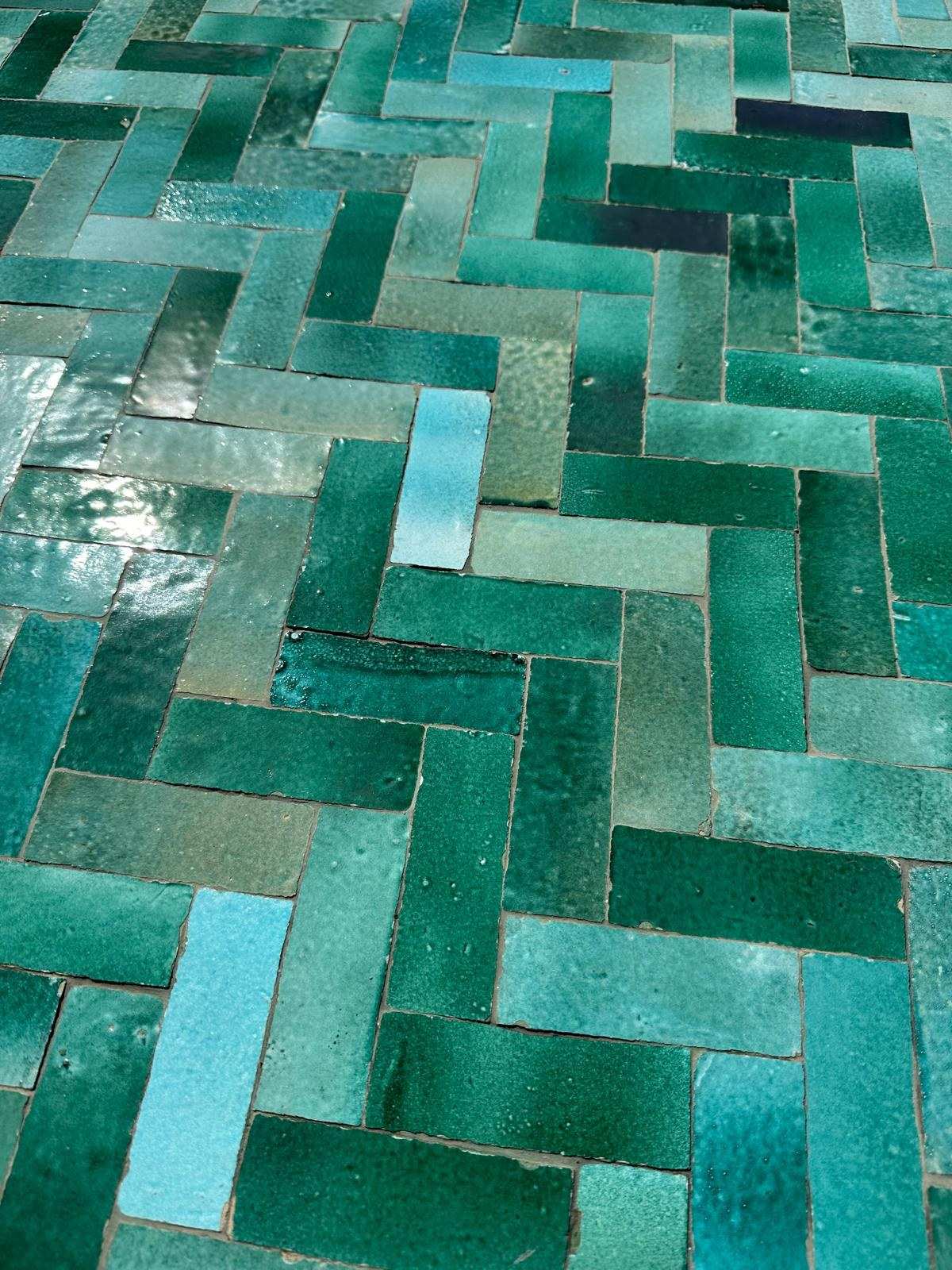
Hand-cut piece by piece, zellige adorns Morocco's palaces, riads and fountains. The history and skill behind an exceptional craft.
You cannot visit Marrakech without coming across zellige: on palace walls, around fountains, on riad floors. Behind these mosaics lies a highly demanding craft.
What is zellige?
Zellige is a mosaic made of small pieces of glazed terracotta. Each piece is cut by hand, with a sharp hammer, from tiles that have already been fired and glazed. The pieces are then assembled into patterns, most often geometric.
A craft passed down
The city of Fez is considered the cradle of zellige, thanks to the quality of its clay and its workshops handed down from generation to generation. A master craftsman, the maâlem, can spend years mastering the cutting and assembly of the shapes.
Why every piece is unique
Because it is glazed and cut by hand, zellige shows slight variations in colour, sheen and relief. This is what gives it its depth and its very particular light, far from the regularity of industrial tiles.
Where to see it in Marrakech
The Ben Youssef Madrasa and the Bahia Palace offer some of the finest examples of zellige in the city. In the souks, several craftsmen still work in full view of passers-by.
At Domaine Hamyta
Zellige is one of the local materials chosen for the estate, notably for the terrace tables. A way of bringing Moroccan craftsmanship into the everyday life of each lodge.